The Invisible Tattoos

The following is a letter I received from a friend explaining his disappearance I thought best to disclose it to the public, as a warning. My name and the name of my friend are hidden for reasons that will become clear.

Dear —

You wonder where I am and what has become of me, and so this letter trying to explain.

I heard some time ago that there was a new fad spreading through the faddish set, invisible tattoos. Of course I doubted what I heard. After all, what is the point of an invisible tattoo? Can’t be displayed, can’t be seen, one would think. The idea caught hold of my imagination, piqued my curiosity to an insatiable extent. And, besides, I had not much else to do. So I began to research these strange claims.

It made sense to me to begin my research at the most logical place so I visited tattoo parlours. Why these places are called parlours is a mystery left to the historians of the phenomenon. But, no matter, I visited several, and found them all much the same, usually located on rundown back streets, as if the trade was considered something to be hidden, no doubt adding to the allure of the places, a place forbidden, or something dirty, like the pornographic shops that they are often next too, though I am informed that in the big city these places are high end establishments-serving espresso and biscotti’s while the patrons wait their turn- but in the small towns convenient to my researches such places cannot be found.

The first shop I entered was occupied by a large woman in her 30’s, whose vast skin area was covered head to foot in multicolour tattoos, and, with her, a thin young man, with a pony tail covering tattoos on his neck, which ran down both arms as if snakes were writhing in dance on his skin. They were both at work on a couple of patients, customers rather, though to me they looked liked they were undergoing surgery, the first being a biker type adding to his collection of hearts and knives, and the other, a chic looking young woman with beautiful long brown hair, whose clothes spoke money, expanding the delicate butterfly she had on her ankle to an entire menagerie of birds and flying creatures, covering the length of her legs, as if she desired to be a walking poster for the beauties of the rain forest.

The large woman raised her head from her client, the biker, as I walked in, and asked what she could do for me, smiling in greeting. When I told her I was inquiring about the new invisible tattoos, her smile disappeared, replaced by a look of distrust, as if a cop had just walked in, looking for drugs.

She asked me who told me about them, what I had heard about them. I wasn’t able to help her much and told her so, that is why I was there myself I informed her, to learn about them, if they existed.  So far she had not answered my questions, but instead asked me questions, which only delayed things, and began to annoy me.

Finally, in frustration at the run-around she was dishing out to me, I lost my temper a bit and became more forceful in my inquiry. The young man put down the needle machine he was using on the young woman, paused, then said I should be more polite, -I begged his pardon- then, eyeing me carefully, he said, yes, there was an artist, as they call themselves, who had devised a way of inscribing invisible tattoos on the flesh of human beings, after some experiments he had conducted using the bodies of shaved mice. Or so he had heard. But neither he nor his partner knew how to do it or had seen it done, what the secret was, or the purpose, and said they didn’t want to talk about it, since the idea of invisible tattoos was a threat to their own business and no doubt dark forces were at play. They suggested I drop the matter, and let the rumour disappear into the landscape of urban legends. But I was not about to give up, so, after I left them, I visited several other places, with the same result, suspicion, and obstruction at every step.

I must have visited a dozen or more of these places with the same result and frankly I was getting discouraged, concluding it was just fake news one hears about all the time. But I took a deep breath and decided to try one last option, a small tattoo place I had missed, but which was brought to my attention one day as I was just out for a walk and turned down a street I had not been on before, and, passing an old house, saw a small sign on the door-that said “The Art of the Unseen-Tattoos For The Discriminating.”

Needless to say the sign offered possibilities and so I walked up to the old wooden door and tried to look in, but couldn’t see much through a lace curtain on its small window, nor could I see through the front window, which was also curtained. Naturally, I turned the doorknob, and swung the door open into a dimly lit room where an old man sat in a large armchair, reading a book. He looked up and with a crinkle in his warm eyes, smiled, put the book down, stood up and said, “Welcome” with one arm, gesturing for me to sit in a smaller chair opposite him, which I did, while looking around for the usual paraphernalia one finds in tattoo parlours, but saw none, just some old black light posters from the 60’s of The Beatles, and Jim Morrison on the walls, some lit candles offering the little light, a joss stick offering its pungent scent of sandalwood to the air, all very psychedelic-memories of my youth flooded into my thoughts.

The man, who must have been in his 70’s with long white hair, and beard, tall, and yet, despite the white hair youthful in appearance, watched me for sometime minutes before asking me if I would like some tea, which offer I accepted. He stood up slowly, left the room and several minutes later returned with a tray with two cups and a small Chinese teapot from which he poured a golden liquid into my cup and gave it to me, poured one for himself, sat back in his chair, told me I could address him as Ray, then asked how he could help me.

Encouraged by this relaxed reception I explained to him what I was trying to do, to learn whether invisible tattoos existed or not, what they were all about and the dead end I had entered. He smiled enigmatically.  I waited his reply.

It took several more minutes as he sat there seeming to regard me more closely, looking me over, sipping his tea, until finally he said that yes, they did exist, and he should know as it was he who had devised a method to create tattoos that were invisible. This admission astonished me after so much fruitless searching and obstruction, but I quickly gathered my wits about me and asked two questions, why and how.

At that he leaned forward bringing his face closer to mine and began his story of how he had become a tattoo artist years ago, a long story worthy of another letter but which you will not be encumbered with here. He had won prizes for his skills and designs, and was happy to give people what they wanted. Which is what? I asked. To which he replied with his own question, why do people want to cover the natural beauty of their bodies with images and symbols and then answered his own question with one word, Vanity.

Of course everyone is vain and wants to look good and have an image of themselves they want to present to the world. We spend a lot of time preparing for the day trying to look our best. But he went on to relate that he observed many of these people come back again and again, never happy with one image, becoming bored with it after some weeks or months and wanted to add another one, and another, and another, until in some cases their entire bodies were covered in colours and images. But it never satisfied them, and then of course they were stuck with them. They were permanent. Once you had made your statement, you couldn’t change it like you can your clothes or your haircut.

He also observed that though his clients insisted on being decorated to show the world something about themselves, when people paid attention to their tattoos they reacted with hostility asking things like “what are you staring at,” or “what’s your problem” or, if the tattoo was in Chinese calligraphy or was some type of symbol, and people asked what it meant the same reaction was elicited, generally resentful that they were being asked. The resentment was worse when curious people, seeing a walking work of art in front of them, or walking down the street, went up close to take a look; for people assumed that if someone had painted their body, then they must want people to look at the art they had covered their bodies with. But in most cases, the reactions were surly and dismissive, the, “don’t bother me,  “none of your business” or, ”if you don’t like it don’t look at it,” sort of attitude. 

This discordance between the wish to paint their bodies and the resentment towards those who wanted to understand or look closely at the images, revealed to his mind that they were not really at ease with the images on their bodies, and he began to consider what the purpose was for those who wanted tattoos, for those getting them, not for some ancient religious or cultural practice, but for pure decoration, or to make a statement about their lives, about eternal loves which never were, loyalties to abandoned causes, about events in their lives they now wanted to forget. It became clear to him that he was not helping people add to their lives with tattoos, instead he was helping them hide from themselves and to distance themselves from others.

Anyway, that is what he thought and explained to me. The fake invisible tattoos, those special inks visible only under black light, the latest trend in the business these days, he rejected as inferior and dangerous, a gimmick. Instead, he had researched old histories of invisible inks used in ancient times, and found a book written in the 1600s, by Dr. Hans Von Hauser, of Vienna, a chemist and biologist, who had travelled to the Indies and other lands, studying the origins and history of tattooing, and had come across an account of an ancient type of ink once used by head-hunters in Java that had the capacity to disappear at the will of the person on whom it was used. This intersection of the physical with the mental intrigued him. So after years of experimentation, and yes, on shaved mice as guinea pigs, so to speak, he determined what the formula was and set up the small place he was now in to seek out people who wanted tattoos that could be invisible when they required. But he had met with failure. Either the images stayed visible or they never appeared when desired and he realised that he must have missed something in Dr. Von Hauser’s book. Years of further research led him to an antiquarian bookstore in Amsterdam where he was fortunate to find a second volume of the professors’ work which turned out to be the key to the whole thing, for it dealt with the mind control methods that had to be learned to be able to control at will the appearance or disappearance of the images.

This volume he absorbed intensely, pouring over its contents with difficulty. He had to relearn his high school Latin to comprehend it as the good professor, like all scientists of the time, wrote his works in that ancient language. Nevertheless, he was able to absorb and understand the meditation techniques described in the book that could be used to control the ink, to control the skin’s reaction to the ink. Since mice were useless for this aspect of his experiments he had try it on himself. I asked him if it worked. He replied by pulling up his sleeves where no tattoos existed. He then sat back in his chair, closed his eyes and began chanting in a language I could not understand or identify. He did this for several minutes, nothing much happening, though his chants became more intense and louder, until, suddenly, there appeared on both arms below his elbows, images of ancient symbols intricately linked together into a montage of mystery. 

He then opened his eyes, ceased chanting and said, “You see?”

I was impressed, fascinated by what I had observed and asked him if he had done this to anyone else. He answered that he had chosen several people who had become aware of his experiments, friends, though he had few, and had at their request decorated them. But it turned out be another failure. The ink was easily made and applied, but their ability to learn the mind techniques never reached the necessary level of understanding and control. They were tattooed, but the tattoos remained invisible, except for times when, outside their control, and unwanted, the tattoos briefly flashed an appearance, to the surprise of the person and those around them. If you are having dinner with a friend and suddenly their face becomes alive with snakes and birds in multicolours, the effect can be disconcerting to them and everyone in the restaurant. A couple of them had nervous breakdowns as a result and had to be hospitalised in a state of mental crisis. So he had stopped doing any further tattooing until he could find a way of controlling the tattoos more effectively.

Then he became more hushed and leaned forward again to ask if I had any connection with the army. I had none and told him so. He relaxed a little then told me some strange men had shown up a few months before making the same enquiries I had made, stating they were interested in his technique for military purposes, since if the tattoos can be used to show things, they can also be used to hide things. They were interested in using it for camouflage for their soldiers in battle, allowing them to merge with their backgrounds, depending on the tattoos inked on them. But he had refused to cooperate. They went away, but he was nervous that they would come back and be more insistent. 

My visit with him lasted several hours but I was pressing my luck and he began to become agitated with my over-extended visit and suggested he had to rest, since the mind control technique used a lot of energy and tired him. So I thanked him, shook his hand and left, never to return. 

I spent the next few weeks trying to learn more about Ray and Dr. Von Hauser but was not getting very far, when one day I noticed a small item in the local news that the structure at the address where I met him had been seized by the federal police and sealed. The fate of Ray was not mentioned. So, I fear that they came looking for him, kidnapped him and now hold him in some facility, forced to work with them on their diabolical war plans. It was then I began to fear for my safety since I now know much of the things Ray does and have since moved to another location, a secret location, hiding out from the authorities, regretting I ever became involved.

Regards

C—-

PS, If you do not hear from me in a week, make this public.

The Shape-Shifter, A Love Story

One night in Africa, in a bar, I met a woman, not an unusual event I suppose, but she was not just any woman, and of them there were many, cheerful, smiling, charming, that made it a pleasure to go to the market, to a café, to a club, to walk past the jacaranda trees in full violet blossom, and smell their perfume as they passed, laughing in excited conversation, even the sad ones, for life was short and most were young. No, she was more than that.  Much more; she was a shape-shifter. 

That’s right, that what she said. I laughed, of course, and she laughed with me so I passed it off as just a joke, as an attempt to put one over on the mzungu, the white guy. But in Arusha things are never quite what they seem, In fact, nothing in east Africa is as it first appears, nor in the world entire. 

Arusha is a large town in northern Tanzania that began as a German fort when that glorious nation of culture, trying to compete with the British in greed and destruction, troubled the country over a century ago and then lost it to the British, a change viewed with indifference by the peoples of the land who suffered equally under both.

The old fort buildings are still there-but turned over to a small park and café, quiet, peaceful, with peacocks walking about in loud splendour, a beautiful refuge from the dust of the town. 

Now Arusha is a jump off point for tourists wanting to see the sweeping plains of the Serengeti, where the moon lights the path of the leopard, the lion, the Masai, to see Ngorongoro Crater, Lake Manyara, Tarangire and its palm trees and elephants, the volcano of Mt Meru, dominating the town, Mt. Kilimanjaro, visible in the distance, its glaciers ever shrinking with the rising heat, the famous snows soon to disappear and the legends with it It’s also famous as the place where Hemingway wrote The Green Hills of Africa and, yes, The Snows of Kilimanjaro, and where the Hollywood film, Hatari was made. I once slept in the same room Ava Gardner did. I have never gotten over it. 

Why I was there is another story, which has to do with politics, its twin, war, and a Rwandan general I was counsel to at the war crimes tribunal, which had been created by those who created and moulded the war, like putty in their hands, to cover their crimes by blaming others. It’s a long story, for another time, and I only tell you this much to explain my being there.

But about the woman; she said her name was Mariam, and, being polite, I didn’t question it. She was pleasant company and I was alone. 

I was sitting at the bar, nursing a scotch, a Johnny Walker Black, if you have to know, talking with the barman, Joseph, a distinguished man with a pencil thin moustache, and a touch of grey in his short dark hair, and, like all barmen, wise to what was going on, to people.  He was slowly polishing a glass in front of me as I sipped on my drink, but then he stopped to lean forward and tell me “the girl at the end of the bar is making eyes. Be careful.”

I looked over of course, and there she was, a stunning beauty. She had dark brown eyes that looked right through me and lit me up from inside, with a smile to keep it charged, and well, warning or not, like I said, you get lonely in strange places, strange to me that is, and any company even bad company is better than none. So I gave her a nod. She smiled again, then picked up her glass and very slowly, very sensually, in a gold-green tightfitting dress, sparkling with the sequins scattered over it like tiny stars, came over and sat next to me. 

“Jambo rafiki,” She leaned into me, bathing me in her scent, like vanilla mixed with a rose.

“Mimi ni nzuri, na wewe?’ I’m fine, and you?”

She laughed, flashing her teeth in that smile again, her dark hair pulled back in a tight bun, like I saw once Kim Novak do in that film, what was it, ah, Vertigo, Hitchcock’s film, in fact she had a strong resemblance to Kim Novak, except the her skin was an exquisite dark caramel, in contrast to my northern pallidity, and as she sat down asked if would buy her a drink.

Joseph looked at me with quizzical eyes, but on my slight nod of the head politely handed her the bottle of Kilimanjaro beer she preferred, a beer popular there then and now, set it down with a glass, and then stepped back to take care of another couple of men who had arrived, one local the other seemed Italian from his accent, but they don’t figure in the story so I won’t bother you with them further, nor the other people in the bar and the restaurant it was in, nor the fact the Impala Hotel had three restaurants, all very good and popular so the place was hopping as they say.  But back to our place at the bar.

“What’s your name’, she asked, adding, Ninaitwa Mariam”

‘John,’ I replied, as she sat down on the bar stool next to me, her dress pulling up a little as she did, exposing thighs that could not be ignored. She noticed and laughed again,

“You like me, Johnny no? Well, every man likes me. I am very beautiful don’t you think?’ It’s ok if I call you Johnny? 

“If you want and yes, goes with the whisky and you are beautiful, no doubt about it.”

“But, I can be more beautiful, I can be many things. You are lucky to meet me.’

“Then I am happy to have such luck, but it seems things tend to unfold as they must. So maybe our meeting was inevitable. But, what do you mean you can be many things?”

“Oh, You think we were destined to meet? You believe in kismet?” She laughed again, but in the delightful way she had, then edged closer towards me, touching my right wrist with her warm hand.

“Maybe that it s true. But what were you destined to meet since I can change into any thing, any form I wish, I can be a leopard, or a rock, a cloud or a bird, anything I will, I am shape-shifter.”

She watched my reaction, my arched eyebrows, my slight moving away from her in doubt and disbelief, and laughed again and she had cause, since she both puzzled and intrigued me.  She was ascribing to herself her own cause, control over her own state of being, that she could not only will what she wants and want what she wills, but will what physical form she can take. But like I said, sometimes locals like pulling the leg of wazungus and I assumed that’s what she was doing. 

“Ok, you surprise me, if that’s what you are trying to do. I admit, it’s fascinating idea.  But I have trouble believing you are.  I mean how does that work? Why you? How do you do it? How can your friends be with you not knowing what you are going to be from one moment to the next? Sure, I’ve heard of shape-shifting stories. I just didn’t expect to find one here in this bar.”

“I know nothing of stories. I only know what I can do. But look, I found you, and you found me, so we combined out existence into one, don’t you think, so we have already changed, have we not, we are not the same as before we met?” She touched my arm again and moved even closer, I could feel her breath on my eyes,

“Perhaps I will show you one day, one night, maybe if you buy me dinner, maybe things can happen.” 

Then she pretended to pout and said, in her purring way and accentuating her accent, which seemed to me to be more of the coast, of Zanzibar or Dar Es Salaam than, the interior, the uplands, of Arusha,

 “I’m lonely, I don’t want to be alone.”

Her reverse take on Garbo made me smile but she had me there. I didn’t want to be alone either, for everyone is the other, and no one is himself, or herself, whatever the case may be, a phrase I never understood until I met her and, as she said, my existence merged with hers.

So I asked her, and looking her over, asked, “Is this your original form then, or am I with one of your transformations?”

“This is myself, what you see, what I am. But sometimes I change, if the mood comes to me. Then I just wish it.”

“Magic”

“No, not magic. It is just something I can do. But don’t worry.  I only use it when I get too angry, too emotional, too alive to live as this.

“Can you choose the form you take’

“It always is what is needed in the situation. If I am a leopard I want to rake you with my claws, if I am a stone I want to be untouchable, if I am a bird, I want to sing and fly away. But, I am hungry, and you promised me dinner.”

With that I indicated to Joseph that he could send my tab to the table and, putting my arm out which she took, escorted her to a table overlooking the garden and fountains where she ordered the most expensive plate on the menu and I followed suit and, ignoring the critical looks from some of the other bargirls hanging around, friends of her it seemed, or more, rivals. 

We settled into a conversation about other things, each of us trying to find out about the other.  It was about halfway through dinner, when we were discussing what truth was, brought on by her assertion that it was impossible to know what was true or false, proved by my disbelief of her claims to powers of self-transformation, that Father Mike came into the place, walked past the table, stopped in surprise, saw her, then me, smiled, and turned back to ask if he could join us. 

It was clear from the exchanged glances that they knew each other, and their quick engagement in chatter about others they new, and local gossip, that they new each other very well. But then Father Mike got around. Id met him some months before, in Stiggy’s Café, the best one in Arusha then, run by an Australian named Stiggy, who’d left Australia in the 70’s and after world travels ended up in Tanzania’s version of Rick’s Café, a place where everyone met, all the UN types, the locals, the politicians, the police, the lawyers.  The Rolling Stones played there once. Just walked in after a safari one night, had dinner, downed some drinks, then picked up the guitars on the small stage local bands used, and did a set that tore apart the fabric of the our minds.  But I find myself digressing, there is so much to tell, anyway let me get back to Marian and Father Mike.

Father Mike was Irish, from the Republic, I think Dublin was his home, a handsome man in his forties, with a soft brogue and a peaceful way with him. He had been transferred to Tanzania some years before by the Church and did his good works among the people of the surrounding villages who could not come to the main church of the parish, or who were lost under the influence of the legions of fake holy rollers wearing Rolex watches who demanded the poor pay them to support their version of a church, and, if they complained of their poverty, blamed then for being poor. You only knew he was a priest from his collar; otherwise he looked like he could be one of the tourists or working at the local UN headquarters, with the CIA.

The local gossip dispensed with, Mike finally acknowledged me and said, 

“I apologise John, but I was surprised to see Mariam here, I heard she was in Dar, and she’s hard to ignore. She got me to read the Koran and to listen to the call of muezzin in the night Anyway, my friend, how are you?”

“Fine, fine, Father. I’m fine. But after meeting Mariam, I’m not so sure,” at which Mariam laughed, and replied, 

“Honey, you are fine, better than fine. Don’t worry. I am really harmless.” 

And she laughed again while picking up her glass of wine to sip, while raising her eyebrows at me, a silent means of communication, which becomes very useful once you get the hang of it. 

Father Mike also laughed and said, “So, she has told you she is a shape-shifter?”

“So everyone knows.  And all this time I thought it was our little secret.”

“Ah, no, she tells everyone that. Never seen her do it. Don’t know of anyone that has, but there are stories, and not just the ones she tells.”

“So, you believer her?”

“It doesn’t matter to me or not. Mariam is special. Right darlin’?”

“Yes, Father Mike, I am something special. That’s why you help me when I need it, Nakupenda pia, I love you too,” and she blew him a kiss.”

I had to break it up.

“Ok, Father, so what are you saying? That the universe is not governed by natural laws, that miracles can happen?

“Ah, Johnny, you set me up with that one. I don’t believe in miracles.  I’m not even sure there’s a God. I have my doubts, frankly we all do, we just don’t’ say it publicly. But I didn’t join the Church for all that mysticism. For me, where I was, coming from a family of six kids and no money, being a doctor or a lawyer, or what have you, was not possible, it was the only way I could see of helping people and I felt the need to help people. Freud would have something to say about it.  Anyway that’s how I try to live and love. Do no harm, and help others when I can.”

“Fair enough but how can it be? Marian how can I believe you, and then believe anything?’

“Allah is Great and can do anything, and I am his instrument.”

Insha’Allah, Mariam” replied Mike. 

Then to me, 

“Look at it this way, the Church tells people that Jesus died and came back from the dead. We tell them he was a man but also a God and the son of a God, a Spirit incarnate, but being human at the same time, he was made a human sacrifice to God, a barbaric concept only exceeded by the practice of feeding worshippers the Eucharist and the wine, which become his flesh and his blood, performing two miracles at once, first, transforming inanimate things into life, and then, telling people to commit cannibalism by eating them. Hundreds of millions believe these transformations to be matters of fact.  So why should you not believe Mariam?”

“I’m a card carrying atheist so I don’t have to believe any of it.”

“No, but who is the arbiter of what is true or false? You?”

“Well, no, but….”

“You see the complexities, we’re into metaphysics and I haven’t had dinner yet.”

And so the evening drifted into night, the dishes came and went, the wine and whisky flowed, the conversation meandered into deep valleys and up steep mountains until we were sated with everything and I had to decide to get back to the house I rented in Sakina, a district of the town a couple of kilometres down the road, or stay up all night. But I had a trial to attend and had to be fresh. 

Mike, always courteous, stood up and said his good byes first, winked at me, winked at her, then walked out past hands extending to greet him, leaving me with Mariam who seemed to be intent on keeping me company, and being weak of the flesh, as the Bible says, or just being myself as Nietzsche would say, invited her back my place, called my driver to pick us up, and ten minutes after his “Ndiyo, mzee, I’ll be right there”, we were dancing to some music in the living room of my house, the lights down low, the feelings up high. 

I don’t remember much of that night. No, I am not being evasive. It was too much to keep in my mind. She was wonderful. The whole thing was wonderful. I remember feeling like I was hallucinating with the love, the music, and the caresses; how her waist chain of glistened gold in the fragments of light.  But the next morning she was gone before I woke up, leaving behind a note, saying we’d meet later that day, signed with a kiss of her lips. I assumed we would. But we never did. 

She never came back, not to me. I had failed to get her mobile number and Father Mike, when I met him the next day, just shrugged, and said, “That’s Mariam. She’ll show up again. In the meantime forget her and move on to less exotic possibilities.”

Some weeks went by before I heard of her, from one of her rivals, Rose, another bar girl at the Impala who joined me for a drink and in the conversation mentioned seeing me with Mariam. I nodded, and she continued,

“You know she is in the prison right now.”

“Prison?”

Yes, they say she stabbed a man in the Queen’s Pub a couple of weeks ago who tried to be too friendly. That is what the police say. But everyone knows they lie. Many people saw her shout at the man she was dancing with to keep his hands to himself, then she suddenly vanished and on the dance floor, a leopard appeared that leaped on the man with great forced, ripped his throat open, then sprang off into the darkness. The man died of course.”

A few months later I had dinner, in the garden of the Arusha Hotel, with a local police captain about an issue about my own security, during which he began telling me about some the cases he was working on. Mariam’s name came up.  I told him what I’d heard.

He didn’t look surprised.

 “Ndiyo, we finally caught up with her in Zanzibar, brought her back here for trial. She was facing several years.. A terrible thing she did, but claims it wasn’t her. Witnesses talk of a leopard, but friends with tall tales won’t go far in court.  It is clear what must have happened. She was in the prison here. You could have visited her.”

“Was? Could have?”

“Yes, somehow she escaped. It is not known how. We think she must have seduced one of the guards and he helped her. But, you know, despite what I said about tall tales, the night she disappeared from her cell, a guard making the rounds of the walls, checking the cell windows and the perimeter, said he saw on her window, what looked like a bird, suddenly leap into the air and dart off into the void.”

He observed my reaction to this with slight smile, amused. 

“Do you think…?”

“Sometimes, my friend, it pays not to think.  All I can tell you Johnny, is that this world is never quite what we think it is and if you ever think you are on the edge of finding out what it is, that’s when the ground shakes, buildings come tumbling down, rains pour, oceans rise, volcanoes erupt, fires rage, storms howl and you find you have fallen into madness. Would you like another whisky?’

“Sure, Captain, asante sana. I need one.” 

And, as he signalled the waiter to bring the bottle, I sat back and gazed out over the garden, the garden lights, the people dining, talking, the waiters and waitresses moving back and forth, the stars in the sky dancing to unheard music and thought deep thoughts about existence and what it all meant, but that waist chain kept stirring my mind, how she moved, what she said, how we were that night, man and woman, and, how, whether leopard or bird, or whatever she was, she had transformed me. 

The Man At The Church

Goya, man-war

I have the habit of going for a walk in the morning, walking silently, in safe solitude, simply breathing, legs stretching out, arms keeping time, feeling a different rhythm of life. It helps me deal with the increasing agitation I experience on hearing the daily news of wars, corruption, of people alienated from each other, from themselves, of a dying world.

My routine takes me up the paved road to the top of the hill, the hill that dominates the small Ontario town in which I live, which lies spread out along the river that winds its way south to the great lake. There, looking down over the valley below, sits a church, a cathedral almost, St. Mary’s, the Catholic church which dominates all the other churches in the town by its majesty, as if to show the protestants what a real church should look like. Sometimes, when the mood strikes me, I stop to look at it, to admire it, for though I am not a religious man, the ceremonies, the architecture, the art and iconography of the church are to me mysterious and beautiful. The rest of it creates no interest for me. I find my salvation in the nature that surrounds me, not in the mythology of its creation.

Or so I thought, until something happened that caused me to reconsider the mysteries of the world.

One day, in early June I think it was, the year of the great spring rains, I decided to get up earlier than usual to take my walk. I couldn’t sleep. The sun was rising. It promised to be a dramatic overture to the day; a blue sky covering green hills awash in bird songs sung in many different keys, accompanied by the soft rustling harmony of countless leaves whispering in the warming breeze.

The locals of the town were beginning to stir. The occasional vehicle, a pickup truck, a run-down car, passed me by on the way to market or work, but no one else was walking along the street that led from my house to the main street, then up the hill heading towards the edge of town and the tower of St. Mary’s that held the big bell; the bell that rang out several times a day calling the faithful to prayer.

When I got to the top of the hill and stood in the shadow of the entrance to the church with its big wooden double doors, flanked on each side by a Norman tower graced with several stained glass windows, the left tower with the spire and cross at its top, the right containing the bell, I paused in my walk, put my hands in my pockets, looked up to the bell tower and wondered just how big that bell was. It was while pondering this question that I heard the clunky thud of the church doors opening and closing and on looking over I saw a figure coming towards me dressed in the black habit and black beard of a Jesuit, which struck me as odd as there were no Jesuits in the parish that I had heard of.

I could not see his face. It was hidden in the shadows of the old fashioned cowl he had covering his head. He approached me slowly with a steady step until he stood in front of me. For some reason, the angle of the sun, the weight of his cowl, I could not see his face apart from the black beard, tight, grim lips, the tip of a hooked nose above the moustache. The rest vanished into the darkness of the hood he wore despite the warming of the day.

I greeted him with the usual “Hello; nice day, isn’t it?”, or some such thing that we say without thinking when meeting strangers. It gets muddled in my head now, but there was no response. The figure stood in front of me without moving, very still, like one of those human mannequins tourists are delighted by in Europe, a Marie Antoinette, a silver clown, or a marble Dante with his book. He seemed very solid at first, but then I noticed that his form shimmered in the light as do those mirages of dark water that lie across the road in the summer heat and vanish as soon as you see them.

The silence of this apparition, for so it seemed to be, unnerved me. I stepped back, took my hands from my pockets and prepared to retreat. But the form continued to stand there without a sound or movement. Now more unnerved, I challenged him with, “Are you all right Father? Can I help you?’

There was no sound, no movement, except for the subtle, almost undetectable, shimmer I referred to before, but then a voice that seemed to come from some distant place, some distant time, cried out, as if wailing at a death, “What have you done? What have you done?” And with that, the figure raised his right hand and pointed it, while turning his body, calling out all the while, “What have you done?”

He spoke in French, a language I understand, but with an accent I had not heard before. I still am not sure if I understood him correctly, but I was so transfixed by the voice and the movement as I followed his hand pointing at the world around us, that I seemed to comprehend him nevertheless and was surprised when a sudden feeling of intense melancholy swept over me. Tears filled my eyes, and I fell to the ground at his feet, overwhelmed by sudden grief.

He stopped turning, looked at me, lowered his hand, and bowed his head. He began to turn away from me. I reached out to try to stop him, but my hand passed through air. I struggled to my feet, wiping away the tears that still bathed my eyes, trying to restore my equilibrium, but he did not stop and kept walking back towards the doors, his shoulders and back bent, his head lowered and, through my own tears, I saw signs of a man sobbing uncontrollably. I managed to shout out, “Who are you?’ perhaps an unfair thing to ask when I was not even sure who I was.“Your name?” And protested, “I’ve done nothing, just lived.”

He stopped, turned his head to look at me over his shoulder and with a voice that came from a deep abyss said, again, “What have you done? What have you done? Terrible things, terrible things,” each word a moan, or so it seemed, as he turned his head away and walked slowly back to the door of the church where his shimmering figure merged with the door and dissolved into the shadows as if he had never been.

The encounter so disturbed me that I felt paralyzed for some seconds until I regained my senses and, shaken, decided to turn back towards home. As I walked slowly back into the town, I reflected on the melancholy encounter, what it meant, that question from the past demanding an explanation from the present, about our destruction of the future. For that was what it was. Of that I am sure.

Upon relating what happened to my wife, my friends, my doctor, explanations were quick in coming. My wife looked at me oddly. Some said outright I was a liar and pulling their leg. Some religious people took it as a proof of God, a warning from the Almighty, some as the visitation of an angel. The Catholics quickly claimed it as a miracle, proof of the true martyrdom of Jean De Breubeuf in 1649, whose ghost this undoubtedly was. I hear the matter has been raised at the Vatican, and the students of the local schools now discuss the work of the Jesuits in the area three hundred years ago. The Protestants, in protest, proclaimed it to be God’s clear condemnation of the Roman church. The new agers stated categorically that it was the manifestation of some spirit of nature, mourning its steady destruction, and, of course the psychiatrists, my psychiatrists, determined, on clinical evidence, that it was an hallucination, a psychotic episode; that I had experienced a break with reality. I cannot comment on these theories. When I try, my attempts are considered just more evidence that my mind is unbalanced. And who am I to say it is not.

Several months have since passed. I have learned now to keep quiet, to agree with them that I was ill but now am welI. I was finally allowed home after a long period of analysis, allowed to return to the birds, the sky, the whispering leaves, to again walk past the church on a warm spring or summer’s day, as if nothing had ever happened. But, each time I do, each time I see those doors, when the light is right, the sky is blue, the leaves whispering, and no one else is there, I still see the man at the church, and hear that ancient voice moaning and asking over and over again, “What have you done? What have you done? Terrible things, terrible things.”

The Strange Tale of Dr. Emilio Ariosto

Modigliani_Seated_Man_with_a_Cane

He came into my office slowly, steadying himself with a walking stick; the kind that looked like it might contain a sword. It was a January day. His long black coat still smelled of the cold street from which he had come. He had a leather pouch slung over his shoulder, one of those expensive bags men in Europe consider stylish.

I stood up to welcome him, offered my hand. He shook it and, following my indicating arm, sat down in the chair opposite my desk. As I adjusted to my chair he took the bag from his shoulder and rested it in his lap. Then, almost without a pause, he began to talk. In a soothing, steady voice, he introduced himself as Dr. Emilio Ariosto, a physician retired from practice in Trieste, but who still did his own researches, of a mysterious nature, into the ethereal origins of disease. He went on at some length about the intersecting circles of Atlantis, the lost papers of Hypatia, the secret papers of Galen, Babylonian time-door theory and many other esoteric facts. I immediately took him for a lunatic, but politely continued to listen, as he talked over the hushed sound of traffic that filtered through the window overlooking the street below, to the right of my desk, a whisper of caution in my ear.

‘Well, sir,” I said, after he paused and sat back in his chair to observe my reaction, “Very intriguing but I am at a loss concerning your research. I have no conception of what ethereal origins of disease can mean. But you haven’t come to consult me about that or to give a lecture I assume. So, how can I help you? What legal advice are you seeking? How did you get my name?’

Dr. Ariosto leaned forward in his chair while clutching the pouch with one hand, softly stroking the grey-flecked beard that framed his chin with the other. ‘The reason I am here, Mr. Eiger, is contained in this bag. It contains evidence of a crime. And as for you, I made enquiries. Does it matter?”

“I guess not. But what crime are you referring to? And why me?”

His dark brown eyes narrowed with a slight smile of his lip,

“A crime beyond imagining for most people, because they commit it every day and so to them it is no crime at all. And you, well it will be revealed in the telling.”

With that the smile vanished into a twitching of his lips as he lowered the bag and sat back in his chair to watch me, as if he were watching the reactions of a subject of one of his experiments in the ethereal zones.

“What are you talking about? I really don’t have time for philosophical gymnastics. If you are aware of a crime committed you should report it to the police. Or are you referring to something you’ve done?’

His eyes narrowed, those soft, dark almost oriental eyes. “Ah, well, when I tell you my story you will understand why I cannot report anything to the police, who would not understand it in any event.’ The quick smile again, almost a nervous tick.

“Then, please, proceed. Perhaps you can start by telling me what a doctor from Italy is doing in Toronto on a cold day like this.”

Dr. Ariosto clutched the bag closer into his lap as a fraction of a smile flashed, then said.

“I’ll have to tell you everything as it comes and that may not be in the chronological order you would like. A logical desire but I find I can explain myself best in the digressions that drift through conversations as we drift through life. Don’t you agree?”

I made a slight nod of the head to indicate he was right and tightened my eyes to look more intently at him as he began to tell his story. Then I sat back in my chair, crossed my right leg over left, and listened, as he began his tale.

“Ten years ago I left Trieste to wander the capitals of Europe, with the help of a small fortune I had inherited from my father. It was a great relief to have that fortune come to me. Medical practice fatigued me. In fact, it bored me. Suddenly, I no longer had to work as physician. I am a skilled doctor by the way, but the tedium of day-to-day practice and my interest in the deeper recesses of the human mind and its role in illness quickly led me to abandon the practical for the theoretical. During some months in Paris I became associated with some like-minded people connected with others in Europe, the United States and Canada, the world, in fact. It was one of these who invited me, five years ago, to come to Toronto to attend a meeting of the Psycho-Physical Association of Universal Dialogue that is interested in the matters concerning my research.

“Frankly, I was disappointed in the city, an ugly one in every respect, except for the lake of course, such possibilities, but a city absolutely at war with nature and the people unfortunate enough to inhabit it, not conducive to optimum health of the body, or soul, as they say. In any event some of the people I met at the meeting made my stay here tolerable. There are not that many of us and I recognised most of those attending from other meetings or communications, one way or another. I was then, as they say, ‘approaching middle age’ but there I met a woman, a young woman who banished my years as if they were chains cut from a slave. It is she that drew me here again, today.”

He paused, looked a the floor, lost for a second, then continued,

“When I arrived that first time, I stayed at the hotel where the meeting of our association took place, the Sheraton Hotel, in the central part of the city, near your beloved Osgoode Hall, one of the few buildings in the city to have any harmony in its style. I am sure you agree with me.”

I nodded slightly, “Yes, it has some elegance to it, but then it’s two hundred years old.”

He raised his eyebrows a flicker, “It’s not the age, it’s the achievement of harmony that makes its elegant, makes it graceful. The rest of the city –a digression for another time.

“During the welcoming dinner the first evening after my arrival I found myself at a table with five others, three gentlemen and two ladies. They were all Americans, and so I felt a bit uncomfortable with their ease of manner and their condescension towards their Canadian hosts. Quite amazing. Their humour was irritating and small talk more so, but one of the ladies, the one I have referred to, I found very interesting and of an intense beauty, not so much a physical beauty, though she was that, but an, allow me to say, a deep quality of calmness and poise at being in the world, that could only be founded on a deep intelligence, that instantly attracted me to her.

‘She sat next to me. Her presence was an electric current passing through every cell in my body. I felt a heightened awareness of existence and an extreme clarity of mind. We all introduced ourselves. Her name, she said, was Arianna R. We all engaged in small talk as we looked around the room and thought of our presentations, the short wine list, or what in life had led us to be together. In other words, conversations intersected like waves on the sea, rose and disappeared, roared and whispered, amid smiles and half hidden gestures. It was during a lull that I turned to her. She was on my right side,’

Here he paused to turn in his chair as if he were looking at her beside him,

“and asked her where she was from. She turned her head to look at me. Her dark hair flowed down her shoulders, her violet eyes glistened like a cat’s while her oval face framed a long refined nose ending at very enticingly full lips.”

‘Many places,’ she said, ‘but now I live in New York.’

“Her accent was southern I thought, so I followed through, ‘yes, she answered, ‘I am one of those tired refugees from the south, don’t ask me what state, it makes no difference, it’s all broken.’ A flash of light passed through her eyes like lightening through a cloud and she continued, ‘I have lived in France for many years but now I’m back in the States; but not for much longer. I have plans to go elsewhere, away from all the ignorance which surrounds me.’

‘If you know of such a place, I’d very much like to join you.’

‘I do, even though I am not sure it really exists. I think I have found where to look. As for joining me, if you have the courage, your expertise will be very useful.

“At that point she turned from me as a waiter approached and asked what courses we would like served. I felt annoyed at the intrusion and sat nervously, impatient to hear her voice, until he left with his pad, his pen behind his ear, and she again sat back in her chair listening to the others chit chatting, but glancing at me as she did. I took it as an invitation to continue the conversation.

“I turned my chair a little in her direction, leaned my face near to hers and said in a whisper so no one else could hear, ‘Does this place have a connection with our research?’

“She turned to me with those eyes that penetrated right through me, right into my heart while she picked up her rosy wine glass. She smiled slightly, took a sip, put the glass down, leaned back in her chair and said slowly and a challenging smile, ‘Yes.’

He paused, then asked me, “I wonder if I could have a cup of coffee”.

We waited in silence after I called Diana and asked her to arrange something. Five minutes passed without a word, both of us gazing out the window until she brought in a plastic tray with two white cups holding espresso and a small carafe of water. Dr. Ariosto watched her move with rapt attention as she came, with her dark hair and poised carriage, and I sensed something, a look, a faint reaction from her and from him, almost imperceptible. But once she had left us alone again, except for the faint scent of her perfume, we sat in silence as we refreshed ourselves, slowly sipping the coffee, while continuing to gaze out the window, then, his cup empty, he put it down on the side-table next to his chair and turned to me,

“So to continue, of course I was intrigued with that simple word, ‘yes’ so when she asked me to meet her at her hotel the next day there was no hesitation. We fixed it for 10 in the morning. I was there early.’

“Was she there?” I asked, to prompt him, as he hesitated again and appeared to have gone again into some other zone. My voice brought him back with a slight shudder of his body.

“Yes, she was there. She met me in the lobby and invited me to lunch. We sat in a corner of the hotel café, out of view of others. It was she that began the conversation, asking about my work, responding with interest to my answers, her eyes always on mine, which made me nervous at first but then mesmerised me so that I forgot what she asked sometimes. Anyway, I finally had a chance to ask her about what she had said and when I did her eyes opened wider, her pupils became darker. She became darker, her face changed, her skin drew tighter, as she began to tell me.

‘There is a place in in France, she said, ‘along the Rhone, a cave I discovered when I was walking… I was there with my husband at the time. He is dead now. At least the police think he is dead. He went missing, as I will relate to you. I had just completed my doctorate in neurosciences in America and we decided to go to France. We wanted to celebrate and relax. We stayed in Nice for a week but got tired of the city, even that bay, there are too many tourists now, and so we decided on a quick weekend in the country in the Rhone valley. We stayed at a small hotel, just to take in the culture, the sights. One morning, it was a Friday, I believe, he slept late from too much wine the night before. I woke early, and wanted to get out, get some fresh air, so I got up, went for breakfast then went to the front desk to ask the concierge about walking trails. He showed me a map of them. I decided on one of the trails that ran along the river that looked an easy but wooded walk. It was beautiful. I can still smell it, the fragrance in the air. It made me dizzy a little.

‘So, my mind wandered and I didn’t pay attention to the path. At a bend in the path my foot slipped suddenly on the edge of the embankment and down I went through some brush then rolling onto a ledge a few feet above the river. I was surprised more than injured, felt foolish a bit and angry I had gotten my clothes dirty, my leg scraped. As I gathered myself together, brushed off the dirt with my hands and turned back towards the path I saw, just a couple of feet above me, a dark cavity about twice the height of a person and three times as wide, most of it covered by hanging branches of trees and small shrubs. My heart raced. Caves fascinated me when I was a child. My brothers and I would roam the hills near our house and explore small caves for hours, always wondering what we would find inside, always a little afraid of what might be there. There were caves in this area, popular ones, but this was hidden, was unknown, as I later I learned. It was not one of those marked on the tourist maps. It was mine. My discovery. Of course I had to explore it, at least the entrance.’

Dr. Ariosto paused, then continued,

“She went on to describe scrambling up to the cave, pulling away the branches, looking in and seeing the inclined light from the sun spread across a stone and dirt floor that receded deep into darkening shadows further back and towards which she slowly walked, taking her cell phone from her pocket to light her way until a after a few metres the way ahead was blocked by a wall lined with ochre coloured bricks on which it seemed there were splashes of colour, faded images, priapic, orgiastic, that startled her with their celebrations of the life force, forcing her to turn right into a small room carved out of the rock in which the walls were covered in abstract symbols, or perhaps a script. It is unknown. She trembled as she told me.”

“She said the room was large enough to hold four or five people. But in her own words,

‘It was dark except for the ceiling that spread over my head like the black cloak of the night sky sequined with thousands of tiny stars. Below there was nothing but a rock floor and a circle in the centre outlined with lapis lazuli stones.’

“She said, the rock above her was crystalline, a type of quartz or something, that when she looked at it she knew, or had the sensation that she knew, she was looking at the Milky Way, spreading out in all its vastness and majesty. It was not an illusion, or a delusion. She was convinced she was actually looking through some great lens at the galaxy itself and found herself on the verge of falling down into the depths of the stars, when her battery died, and it vanished.

“She was convinced she had stumbled on a sacred place and that in that dark room in that cave there existed a machine that could see beyond the possible or an element that allowed the mind to perceive beyond the visible and she became determined to find it out.

“Of course when she returned to the hotel and told her husband of her experience he didn’t take her seriously, which angered her. She dared him to follow her there and see for himself, which at first he laughed off, but her accusations of cowardice hit a nerve and so a day later, early in the morning, after a small breakfast hurriedly eaten, they left the hotel with some hiking gear and a small knapsack with necessary items, telling the concierge they were going for a walk by the river and to explore a cave. It was the last time the concierge saw her husband.

“She claims he seemed surprise when she found the cave again and her story was partially confirmed. His scepticism was now coloured by curiosity and so he insisted on being the man and walking ahead of her. He stopped at the entrance, took a flashlight from the pack, told her to follow behind him and in he walked. She hesitated a second or two to give him a chance to experience what she had experienced, then stepped in herself looking for his light but saw none. She called out but there was no answer, she walked to the wall, turned into the room, but there was no one there. She took a step, to turn. Her foot kicked something that rolled on the stone floor. It was his flashlight. She picked it up, clicked the switch, the bulb burned bright. She shone it around, looking for other passages she had missed, nothing, for dark stairs, secret doors, hidden ways, but there was nothing. Then she looked again above her head at the deep abyss of the stars that she could see again as she did the first time, and for a second, she claims, she thought she saw a shadow there, a form like that of her husband, pass through her field of vision, as a cloud blocks the sun briefly as it passes on the wind. And as the shadow passed above she felt a sudden surge of energy pas through her body as all sense of age and time, of place, of self, left her. She has no memory of events after that, just impressions of colours, sensations, electric landscapes. She thinks it was about two hours later that she found herself wandering by a stream just below the cave entrance, calling out her husband’s name.

“She said she returned to the cave, shouted his name, began to panic, began to cry, began to feel alone, finally gathered herself, then, distraught, made her way back to the road to get a signal for her mobile to call the hotel, to call the police.

“The police car carrying two gendarmes intercepted her as she was walking back towards the hotel. In the car and at the hotel she told them time and again what happened. The two young gendarmes listened with slightly amused smiles, but they were thorough and correct and so they went to the cave, her showing the way, and when they came to it, without hesitation, went in, then 5 minutes later, came out.

“They told her, with evident interest in her reaction, that they had seen the wall, the room, and what looked like stars but told her that was nothing more than the light from their torches reflected back by the thousands of quartz crystals, and though they were intrigued by the images and symbols painted on the walls, said it was no doubt an ancient pagan place of worship from Roman times or before; for one of the gendarmes had taken some courses at the local university so knew what he was talking about, he said. Of interest to archaeologists, no doubt, but not them, for no matter what it was, her husband was not there.

“They began to question her again, more closely, and with suspicion. A short while later they returned her to the hotel, arranged for a search team to come in to search the woods, put out a bulletin about the missing man, his description, a photo, and asked her not to leave the hotel.

“He was never found. The police suspected foul play of course. They could not believe her story. They detained her for questioning but could get nothing else out of her and since there was no body, no evidence of a crime, the prosecutor advised her release, with a caution. In other words, they let her know she was still considered a suspect. But nothing happened, the file remained open, but as a missing person case. So, over time, a year or so, the police resources were shifted elsewhere and they left her alone. Her husband, a junior army officer, had no family who cared, so no one pressed the authorities about him. She was left alone with her experience and an intention to return.

“So, this was the story she told me, and that to try to understand what happened she spent two years investigating the deeper reaches of occult science. She claimed she found references in historical records and obscure scientific journals to ancient religious practices in caves which were said to be doorways to the homes of the gods, the sky-world, the underworld, shortcuts through space, means of perception beyond the senses, but no one had done any active research to investigate these stories except record them for their historical and cultural interest. She was not permitted to return to that cave again. It was a requirement of her release. And no one else had followed up on her account and gone to see for them selves. The police had not bothered to report it and she could not. So the mystery remained.

“But to solve it she spent her family’s money on exploring caves over the world, recording myths and legends, stories of others who claimed to have had similar experiences. She travelled the world, getting university grants to do research into culture and its affect on our psychology. But she never again experienced what she had experienced in that cave on the Rhone.

“Fascinating stuff I think you will agree, but was any of it true? That was the question ever in my mind. Was she searching for the keys or was she a fraud. My own researches into the ethereal zones led me to believe that there might be an explanation for what she had experienced, that she might have stumbled on a natural key into those zones. There was no question I wanted to find out. So when she asked me to join her in an attempt to revisit her cave I replied with excited approval. We shook hands, embraced and agreed to meet the next day to determine how we should proceed.”

“And so how did you proceed?” I prodded, as he again looked out the window searching for or remembering something or someone.

He moved his head slightly, nodding to me, picked up his cup to sip the last drops of coffee, and with cup in hand, using it as a baton as he talked, he continued,

“That was obvious. Through some connections in France I was able to learn that the police had no interest in an old case like that and no one would pay the slightest attention to an older man and a young beautiful woman in a hotel in the area, they were all too common. So we booked a flight and within a week were in the same hotel she had stayed in with her husband, separate rooms of course. Despite my desires and natural attraction to her, I was not fool enough to think she had any interest in me. It was a hot day in June.

“We spent the first couple of days getting over jetlag, making inquiries at the local historical society on ancient religious practices in the area, the worship of trees, fascinating things. But finally I had to see the cave myself and it was clear that she had to go with me. It might be that we saw nothing meaning that she had suffered an hallucination brought on by her murder of her husband whose body she likely had disposed of elsewhere or that the phenomenon she had experienced only occurred at certain times or under specific conditions. If she saw the same thing, well, was she to be believed? Of course if I had the experience, then, well we would have something very interesting.”

“The third day we rose early, had coffee, gathered the lunch box the hotel provided and began our walk along the country road, to the trail that led to her cave. We didn’t say much to each other along the way, but the physical beauty of the place was intoxicating so we made very good time. Then she stopped ahead of me, pointed off the trail, said something I couldn’t quite hear, and then disappeared into the brush, an invitation to follow. Within ten minutes we were at the ledge where there was access to the cave. It was all she claimed it to be. We prepared. After pausing to take it all in we took out our electric torches, put my phone on video record and slowly entered the sunlit entrance and into the shadows.

“And indeed there was a wall as she had described, and there were clearly ancient images and symbols on that and the other walls and, in some places, what looked like a type of script, but nothing that I was familiar with, neither phonetic, runic or hieroglyphic, more flowing, more cursive, more like Arabic or Hindi, Korean even but different from all of them. It was fascinating and I was lost in gazing at this feast when I heard an exclamation, and turned my head to see that she had entered the centre of the small room she thought a temple and was staring up at the ceiling, shining her light on it, as if she were enraptured, like St. Theresa, in ecstasy.

“What did you see?” I asked, to break the silence that followed the ecstasy.

Dr. Ariosto leaned forward in his chair, raised his hand towards me as if in prayer, then exclaimed,

“Everything, at once, and so, nothing. I just remember looking up at the roof of the cave, following her eyes, and there spread out, the crystals in the ceiling gave the overwhelming impression that you were floating, suspended in the void, in the middle of the galaxy, a part of it. It staggered me and I stepped back out of the circle and broke the illusion to see Arianna, still enraptured, staring up and then slowly turning, on one foot like a Dervish, arms twisting round her body as she turned, and murmuring words I could not understand. Then she called my name, called me to her and I went towards her as if compelled. As I did, her face slowly lowered from the ceiling and she fixed her eyes on mine. I came right up next to her and asked “Arianna, what is happening?” when suddenly her left hand reached out to grab my throat and her right suddenly filled with a flashing silver dagger she pulled from her jacket which rose high in the air as she prepared to strike.

“And then?” I prompted, “and then?”

“And then,” he replied shaking his head several times from side to side, and shrugging his shoulders,

“and then, I struck her, my right fist. It stunned her, I thought she would stop, but she screamed and came back with the knife raised, so I struck her again, and then turned and ran as her screams followed me out to the daylight. I didn’t stop running until I got to the hotel and had them call the police. They were quick to get there and down to the cave with me but she was gone. There was no sign of her, as if she had never existed. They set up a search, local roadblocks, but she has not been since, at least by them. The police were angry that she had been in the area. The told me they are convinced she murdered her husband in some ancient sacrificial ritual, they had found notes in her belongings the first time that showed an intense interest in such ancient practices, that she was deranged but they had nothing to use in court. They wondered, as did I, how many more there had been, and how she disposed of her husband’s body. Perhaps in the river and out to sea. I wondered, as did they, how she had vanished, where she had gone. But after a few days they returned to other affairs and I was left to myself. I didn’t let it go. I kept searching in conjunction with my other researches. I met people. I found traces. It has taken all this time to find her but I finally have. She has taken on a completely different persona, a different name, a different history. But it’s her.”

“You mean, in this city?”

“Yes, in this city. In this very office.”

“What on earth are you saying? I don’t like jokes in bad taste.”

“You know what I am saying. I have tracked her here and that is why I had to see you, to warn you, to help you. You must have noticed things about her. I share this information with you, this revelation, to do with as you please. I am not going to the police. They will not believe me. Perhaps you will not either. It is of no matter to me. I just thought I should offer the warning and hope that you, perhaps, will do what is necessary, for I am now too old. She pretends not to know me. But I know she remembers. I’ll leave it with you Mr. Eiger. I wish you good luck. I could forgive her but who can forgive the insane?”

At that, he rose from his chair to leave.

“What about your bag, you said you had evidence of a crime.”

His lips widened into a smile, “Would you have listened to me without this prop. I needed it to get your attention. It was an illusion to help you face my reality and yours. The universal crime Mr. Eiger is living in the illusions that we create around us to survive. Reality is always disguised as something else. It is up to you to break free, to see beyond the veil, or not. Good bye Mr. Eiger, and, again, good luck.”

He then turned, picked up his walking stick, and with his bag over his shoulder, walked slowly to the door, opened it, walked towards the office door, nodded at Diana, who looked at him with a question, then walked out, never to be seen again.

I sat at my desk and tried to distract myself from what had happened by shuffling through some papers on my desk, but I suddenly stopped. I realised I didn’t want to know another reality, didn’t want to know about another illusion, I already had too many of my own. He was just a crazy man, a lunatic, as I had suspected. You get them all the time.

Diana came in to tell me about an appointment with a client who had been waiting patiently in the anteroom.. I nodded as she filled me in with that slight accent she had, that I had never thought much about before.

“Have you ever seen that man before?”

“No, she replied, her dark hair falling over her eyes, “he was a strange one though. Why do you ask?”

“Nothing, just wondering, forget it, I said, and then as she turned, “Oh, and Arianna, is there any coffee?”

She hesitated for a second, turned her head, looked at me with those eyes, and said quietly, “Arianna, who is Arianna, though I like the name?”

Her eyes narrowed as they pierced mine. My question seemed to wither under them. I didn’t answer her question, nor did she wait for me to respond but turned, walked out and closed the door behind her, leaving me caught between what I had thought was reality and what I hoped were Dr. Ariosto’s illusions. I fell back in my chair to reflect on the hour just past. As for Diana, I never asked her anything else about the incident and never heard anymore about Dr. Ariosto or his researches into the ethereal zones. It remains a mystery to me to this day but the encounter left me in a state of puzzlement and a constant wondering, every time Diana mentioned us going somewhere alone for a weekend, what if, what if…?

The Escape of Prisoner 4538

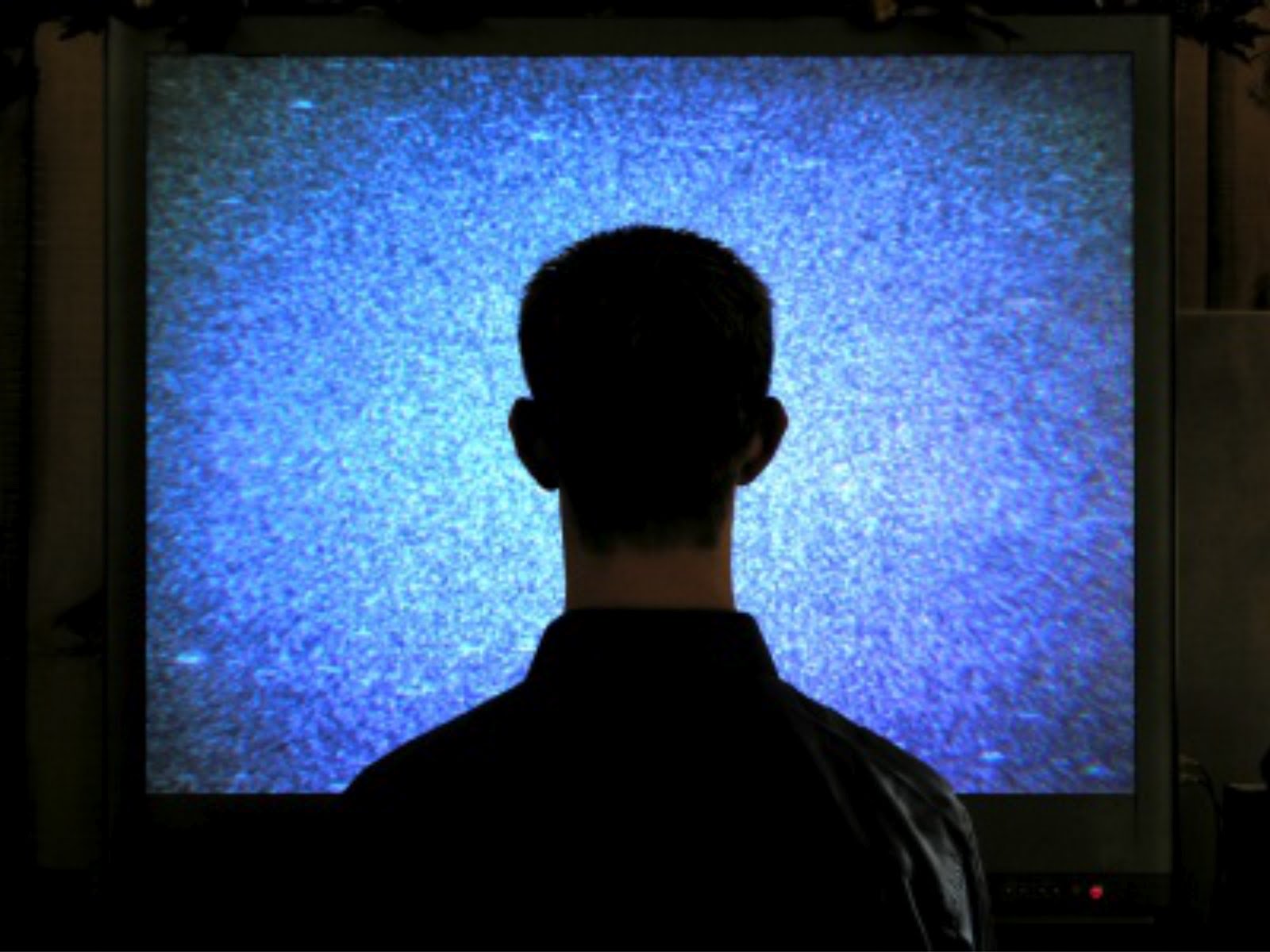
Silhouette-of-head-in-front-of-blank-TV-screen1

He ran fast, so fast his lungs were seared. He ran blindly. He ran like a stag hunted by hounds. Night drew him on, tugging him with urgent hands. He tripped on a root, stumbled, fell, heard shouts, then rose again while the full moon swept his path with a searchlight’s beam.

The shouts increased, lights probed, as he weaved in and out of the grasping brush, the looming trees. His heart raced, faltered, raced faster, as he drove his body forward to escape, to reach what he could not see.

‘Prisoner 4538!’

The rattle of keys in the heavy steel door tormented his mind with abandoned hope, with expectant fear, as he covered his head with a single wool blanket and pulled tight the thin grey tunic that covered him, his body half off and half on the small cot he lay on.

‘Stand up, Prisoner 4538!’

A boot kicked him in the side, then hands dragged him up,  but he raised his hands to resist,

‘Try that again and…’

He never got to say anything else.  One of them held him by the arms while the other glared at him like a schoolboy ready to the tear the wings off a fly,  who kicked him again, then the one with the tattooed hands shouted,

‘It doesn’t pay to threaten us! Move when we tell you to move.”

Strong arms shoved him forward. The floor was cold and his feet were bare.

‘Who are you? Where am I?’ Why am I here?”

He was answered with another shove to the back, then manhandled down a long grey walled corridor, half-stumbling, half running, trying to keep ahead of the men, blinded by the arc lights that lit the way.

It seemed an eternity until the three stopped at a closed door on which was written the single word, “The Teacher,” stencilled in black on the grey paint. One of the men knocked. There was the sound of a muffled but sharp voice. The man who knocked swung the door in, then with the second guard, hustled the prisoner into the room to make him stand before a man in a dark grey suit, white shirt and black tie, seated at a black metal desk who received the salute of the two guards with a nod of his head then observed the prisoner with calm interest.

He waved his hand at a single wooden chair placed a few feet in front of the desk. The guards forced the prisoner down onto the chair, then took several steps back to stand, legs apart, arms behind their backs, looking straight ahead.

4538 tried to sit upright in the chair but the seat was oiled and slippery. He kept slipping down lower than the man in front of him. He tried to grip the armrests but they were oiled too. He gave up and rested in a state of precarious imbalance while the man across from him sat in silence, watching him squirm. The man indicated with his hand and the two guards saluted, then left to wait outside closing the door behind them. There was a silence which seemed to stretch out with no end, then, quietly, the man drew out a pack of cigarettes, took one from the pack, took a black lighter laying on tp of the desk, lit the cigarette, inhaled deeply, then, as he exhaled, asked,

‘Do you know why you are here 4538?’

The prisoner looked around the room, that was otherwise bare, and replied, “I don’t even know who you are or where “here” is. Why don’t you tell me?’

‘You can call me the Teacher, if you wish, and you are here to learn, to accept. That’s all. Are you ready to learn, are you ready to accept?”

‘Learn abut what. Accept what? And how did I get here? Who the hell are you?

‘Your condition. Your place on the road of life; bound to the wheel of things.’

‘I’m not bound to anything. I choose my own path, my own life, my own way’.

‘Your way? Is that a good life? What is this way of yours except an illusion? You’ve led yourself down the path of illusion all your life, and now a break has occurred, that’s why you’re here. You were brought in for your own safety, for the safety of the community, of society. The man leaned forward, ‘And how is a good life possible without knowledge of the way things are?’

‘Maybe I don’t like how things are, and I don’t want anything to do with your wheel of things. You’re lost in illusion, not me. What am I supposed to say? Who are you?’

‘I’m your mirror. Are you afraid to look?’

‘You’re talking in riddles.’

4538 slipped in his chair again, tried to sit back up, but only slipped further down. ‘Let me go.’

‘Oh, we can’t do that, not until you learn and accept. It would be irresponsible. The new world requires it. Everyone must learn, accept, be transformed, must abandon their illusions, face reality, and through knowledge of reality, transcend it.’

‘You sound like a priest.’

‘No, not a priest, you’re friend. I don’t offer salvation, only awareness, and transformation.’

‘Transformation into what? ‘

‘Into that happy being who is happy because he has accepted the reality of the world as it is.

‘You’re mad.’

The man stood up from the desk and walked up to the prisoner, looked him straight in the face, then stood behind him. He leaned down and whispered in his ear,

‘There is no other way.’

Prisoner 4538 moved his head away from the voice but it followed him,

‘Will you accept?’

‘Never.’

The interrogator moved away from the prisoner, then turned to look down at him. He paused then press a button on his desk and the door opened and the two guard reappeared.

‘Take him away. We will talk again tomorrow. Think about what I said. Accept and be transformed or lose yourself in your maze of illusions, each one leading inevitably to another, until your doom.’

Prisoner 4538 was hauled roughly to his feet and half carried back to his cell by the two guards who said nothing but breathed hard the entire way. The hallway seemed to stretch out in front of them forever, the end lost beyond the point of perspective, beyond the endless doors on either side.

They came to a door with his number on it, already opened. He was thrown back onto the cot without a word from the guards, who slammed the door shut as they left.

He heard the keys turn in the lock as he lay still, listening to their steps moving away, his only company the silence of the space around him. He lifted his head. The cell was bare except for the single weak bulb that cast macabre shadows on the walls, the cot on which he lay and a bucket in one corner. He lay back, puzzled, and afraid. He lay quietly but as the hours dragged by, began again to drift in and out of sleep until he was again running, breathing hard as he ran, away from the shouts, from the searching beams, towards a place he could not see but knew was there, somewhere. He ran, as only the desperate can run, until he disappeared into the night’s dark womb and the shouts became distant, faint, and confused.

The doctor ran his hand through his hair as he walked over to the window, reflecting on the question. The leaves of the trees on the hospital grounds were turning. Reds and golds glittered in the autumn sun. Late flowers still blossomed and squirrels played in the branches as nurses walked patients along tree-lined paths, enjoying the warm autumn light.

He paused as he reflected on what he was about to say. The he turned to the group seated in his office, the senior resident, his junior, the psychiatric nurse, all three looking at him, waiting for him to speak.

‘You asked my opinion of this patient. He is very interesting in many respects. I have examined him a number of times and it is clear he has suffered a deep psychotic break, but of course he cannot accept that, it would shatter his world view.’

‘Patient 4538 is still suffering the delusion that he is a prisoner. His delusion even extends to dreaming that he is escaping from a prison; that he keeps waking to be taken for interrogation. He thinks his delusion is reality, his dreams his conscious state. But without any identity it is going to be difficult to treat him. We have no history.’

The junior nodded, ‘Since he was found by the police a few days ago wandering the streets, looking for the good life, he told them, our investigations and theirs have produced no information on who he is or where he’s from; totally disoriented. Said he had to keep running until he found the way, that he won’t accept, won’t be transformed.’

The doctor looked reflective, then replied, as he sat down in his leather chair,

‘A sad case, thinking he can find the good life when he has no idea what the good life is, when he is burdened by the illusions of the modern age, confusing reality and fantasy, trying to  escape everything, refusing to examine himself. To him, his illusions are concrete reality.  It has become the pathological condition of western society these days, but in his case it has developed into an extreme case. I am not optimistic. He certainly won’t accept our treatment. His delusions could be permanent. Perhaps further interviews with him will lead us somewhere deeper into his mind so we can help him but I fear he will never recover.’

He turned to look out the window, reflecting on patient 4538, as the others looked on in quiet agreement.

The sudden buzzing of the telephone on the doctor’s desk broke the thought-filled silence. He reached for the receiver and put it to his ear. His face expressed surprise, his jaw tightened. He listened intently then said, ‘All right, you had better call the police,’ then put the receiver back, turned to the others and said,

‘He’s gone. The door to his room was locked but he’s gone. Just disappeared. Like he never existed. Well, I’ll be damned.’

And, as the doctor sat back in his chair, to ponder how the patient could have escaped, could have dematerialised, vanished, Prisoner 4538 kept running, kept stumbling in the dark, kept running from the chasing fear, running from the teacher, running from reality, searching his endless nightmare for the solace of a dream.