You said you loved, I thought it true,
Loved me, I heard you say,
But there was something in your smile,
That cut the warming air with cold,
As we walked among the trees,
Where children played hide and seek,
Content that Spring was here,
The buds and leaves, the winter gone,
Some thing I could not see,
Until you dropped my hand, and turned,
To tell me, “It’s a lie,”
And as I watched, you walked away,
Past the children in their play,
Down the path we once had walked,
Sharing kisses on the way,
To meet another love, another way,
Whilst I stood in contemplation,
Of who I was, and why,
Then five years on, by some fated chance,
There you were again,
Standing on the platform,
Waiting for the train, in tears,
So asked softly what was wrong,
At which you turned to me,
As though a vision had appeared,
And cried out, “Each long day has made me mad,
 I yearn for you, I long for you,
The other is now just bitterness,
My only love is you,”
But when came the train, she kissed me once,
Then, “Farewell, it's too late to change things now,”
And so I stood, in thought again,
Thinking, I must have had a dream;
Yet, alone, at night, I hear your voice,
I feel your kiss, and wonder how you are,
As we walk beneath the trees again,
Our arms entwined, our eyes entranced,
Together, you and I.
It’s a hard thing to wake at dawn, And wonder why the day was born, To feel the night still drag you down, Like an aged queen who’s lost her crown, And despairing, searches all her life, For one to save her, to take the knife, To wake in silence to a glooming room, As if the world had met its doom, No sound of voice, no children’s song, Too late for that, it’s been too long; To open eyes to a world gone mad, And so, the constant state of being sad, Unheard, unseen, unloved, unknown, Thinking that the fault’s your own, But then there came a tapping- Which became a louder rapping, Upon the white-framed window pane, On which there drummed a dreary rain, The majestic rapping of a kingly crow, That saw me toss my head in woe, And called to me, “Awaken, from your semi-death, A new day dawns, draw deep a breath.”
You are making me crazy,
And I don’t know why,
Crawling out of my skin,
The only hope to die,
Who are you?
Even the mirror lies,
Reflecting back the stare,
Of wild, empty eyes.
In the dark, cold, night of doom,
Words are said, that shed the gloom,
And wake a woman’s waiting womb,
Who weeps before her lover’s tomb,
Though lives he still, although entombed;
Words that cry out loud for life,
In midst of war’s eternal strife,
Cry out for peace, to dull the knife,
To dull the drums, the calling fife,
That call to us, from ancient place,
Now lost to us in time and space,
“Regard the glass, regard your face,
Look you! See! That Love has gone, without a trace;
You’ve turned to stone, are hardened things,
But still inside an ember lies,
To warm the heart, to greet the skies,
If only you could once be wise,
Could rise again, before it dies".
The clouds lit up and split the night,
Six times the flash was seen,
Then unknown things plunged down to earth,
As fast as eyes could see;
Six by six, they tore the sky,
Like bolts thrown down by Zeus,
In ancient times, against the wrongs of Man,
To scorch the plains where evil bred,
To burrow deep, to burn the rot;
When Gods, in anger, slew the fools,
Who defied the laws that kept the peace,
Defied their wisdom, defied their love;
The clouds lit up and split the night,
And all looked on amazed,
For it seemed avenging angels,
Had shed their wings in holy wrath,
To begin the final end on Earth,
Of Lords of war and hate.
Many people talk about the soul, what it is, where it is, where it comes from and where it goes. Voltaire wrote an essay sparkling with wit on the subject, proving that, in fact the soul cannot exist, since that would mean God is not all powerful and is reduced to tricks to animate matter when he has the power to infuse it directly.
Voltaire did not believe souls exist, but he still could not shake the superstition that God does. Well, even a genius is locked in his times and the general thinking of those times. But, despite his irrefutable arguments that souls cannot and do not exist, contrarians continue to insist they do, though they can never convince even themselves why souls are necessary, how an immaterial substance, a zero, a nothingness, can control matter, whether in an animal, a vegetable, or a human being, and why souls are not considered to exist in every living thing no matter how small or large or of what nature, or even agree on whether the soul enters the body when conception takes place or after, and from where it comes, nor can they agree on where it goes, if anywhere, on death of the body, nor what this means for the person or animal, fish, insect or tree which had been occupied by this soul.
Their counter-argument is simply, God is all powerful, and decided these things called souls are necessary to animate and motivate life, but only human life, the other beings of the universe being quite capable of living happily without souls. But then Voltaire and others ask again, so why can’t we? Their reply, only humans have the necessary intelligence to require souls as we need them to make moral choices of what is good or bad, wrong or right, forgetting, or not wanting to know, that many animals are as intelligent as we, that different peoples have very different ideas of what is right or wrong, of what a good life is, what is moral and what is not, so that it seems their various gods have injected into them various souls to match the requirements of the time and place and the culture concerned, or that, if there is a single God, then it has no idea what it is doing and guides humanity by whim and caprice.
But however all this may be, they can never explain how the soul itself is animated and motivated, or even what this nothingness is or how a nothing can be a something. One assumes that the soul also has to be controlled by some means, otherwise, if God directly infuses them with his presence, the question arises once again, why does he not do that directly with us? This circle goes round and round and no one is any the wiser.
Nevertheless, the question has to be considered; does the soul have a soul, and does that soul have a soul and so on, to infinity, never seeming to reach an end, until, finally, we reach God, until the soul of souls becomes God and then, yes, the question becomes, does God have a soul, and if so, as it seems it must, from where does it come and what is its nature?
Or we are faced with the fact that God does not need a soul, since the devout claim God is self-motivating, self-willed, self-controlled; in which case we must ask, well, if we are made in the image of God, if we are ourselves are regarded as little gods, replicas of the bigger one, then we must have the same powers as this God, that we are Gods then, are we not and therefore do not need a soul: an absurd conclusion, being Gods, but one that the believers in fantasies force upon us with their own logic. In fact, the Gnostic Gospels state that we are gods in very clear terms.
In the Gospel of St. James, Jesus tells his listeners that if they want to be him, they must follow the way, and when asked what is the way, responds with the very Taoist statement, that the way that can be explained is not the way. I am the way, he says, and if you follow the way, follow me, then you too will become me, Jesus, will become a God. In which case I do not see the need for a heaven or a paradise, an invention of priests to fool and bamboozle the unthinking.
One can see how this type of thinking has led us to the precipice we are on, a world being destroyed by superstition, by ignorance, by belief in things which aren’t there, basing our lives and civilisation on these false beliefs, one of the most important being the belief of many that the soul lives on after us, so that death and destruction are not seen as the end but a beginning, with the result that these fanatics of the soul are leading us closer and closer to the edge of extinction, which would perhaps not be so bad if it were only ourselves, but we are condemning all know life to extinction. And where will the souls of all these beings be then, but lost, wandering in space and time, alone, without purpose, until God orders them to enter life in other places which need them. So round we go on the never-ending circle of absurdities that Reason, that feeble light of humanity flickering in the darkness, has never been able to break.
The following is a letter I received from a friend explaining his disappearance I thought best to disclose it to the public, as a warning. My name and the name of my friend are hidden for reasons that will become clear.
Dear —
You wonder where I am and what has become of me, and so this letter trying to explain.
I heard some time ago that there was a new fad spreading through the faddish set, invisible tattoos. Of course I doubted what I heard. After all, what is the point of an invisible tattoo? Can’t be displayed, can’t be seen, one would think. The idea caught hold of my imagination, piqued my curiosity to an insatiable extent. And, besides, I had not much else to do. So I began to research these strange claims.
It made sense to me to begin my research at the most logical place so I visited tattoo parlours. Why these places are called parlours is a mystery left to the historians of the phenomenon. But, no matter, I visited several, and found them all much the same, usually located on rundown back streets, as if the trade was considered something to be hidden, no doubt adding to the allure of the places, a place forbidden, or something dirty, like the pornographic shops that they are often next too, though I am informed that in the big city these places are high end establishments-serving espresso and biscotti’s while the patrons wait their turn- but in the small towns convenient to my researches such places cannot be found.
The first shop I entered was occupied by a large woman in her 30’s, whose vast skin area was covered head to foot in multicolour tattoos, and, with her, a thin young man, with a pony tail covering tattoos on his neck, which ran down both arms as if snakes were writhing in dance on his skin. They were both at work on a couple of patients, customers rather, though to me they looked liked they were undergoing surgery, the first being a biker type adding to his collection of hearts and knives, and the other, a chic looking young woman with beautiful long brown hair, whose clothes spoke money, expanding the delicate butterfly she had on her ankle to an entire menagerie of birds and flying creatures, covering the length of her legs, as if she desired to be a walking poster for the beauties of the rain forest.
The large woman raised her head from her client, the biker, as I walked in, and asked what she could do for me, smiling in greeting. When I told her I was inquiring about the new invisible tattoos, her smile disappeared, replaced by a look of distrust, as if a cop had just walked in, looking for drugs.
She asked me who told me about them, what I had heard about them. I wasn’t able to help her much and told her so, that is why I was there myself I informed her, to learn about them, if they existed. So far she had not answered my questions, but instead asked me questions, which only delayed things, and began to annoy me.
Finally, in frustration at the run-around she was dishing out to me, I lost my temper a bit and became more forceful in my inquiry. The young man put down the needle machine he was using on the young woman, paused, then said I should be more polite, -I begged his pardon- then, eyeing me carefully, he said, yes, there was an artist, as they call themselves, who had devised a way of inscribing invisible tattoos on the flesh of human beings, after some experiments he had conducted using the bodies of shaved mice. Or so he had heard. But neither he nor his partner knew how to do it or had seen it done, what the secret was, or the purpose, and said they didn’t want to talk about it, since the idea of invisible tattoos was a threat to their own business and no doubt dark forces were at play. They suggested I drop the matter, and let the rumour disappear into the landscape of urban legends. But I was not about to give up, so, after I left them, I visited several other places, with the same result, suspicion, and obstruction at every step.
I must have visited a dozen or more of these places with the same result and frankly I was getting discouraged, concluding it was just fake news one hears about all the time. But I took a deep breath and decided to try one last option, a small tattoo place I had missed, but which was brought to my attention one day as I was just out for a walk and turned down a street I had not been on before, and, passing an old house, saw a small sign on the door-that said “The Art of the Unseen-Tattoos For The Discriminating.”
Needless to say the sign offered possibilities and so I walked up to the old wooden door and tried to look in, but couldn’t see much through a lace curtain on its small window, nor could I see through the front window, which was also curtained. Naturally, I turned the doorknob, and swung the door open into a dimly lit room where an old man sat in a large armchair, reading a book. He looked up and with a crinkle in his warm eyes, smiled, put the book down, stood up and said, “Welcome” with one arm, gesturing for me to sit in a smaller chair opposite him, which I did, while looking around for the usual paraphernalia one finds in tattoo parlours, but saw none, just some old black light posters from the 60’s of The Beatles, and Jim Morrison on the walls, some lit candles offering the little light, a joss stick offering its pungent scent of sandalwood to the air, all very psychedelic-memories of my youth flooded into my thoughts.
The man, who must have been in his 70’s with long white hair, and beard, tall, and yet, despite the white hair youthful in appearance, watched me for sometime minutes before asking me if I would like some tea, which offer I accepted. He stood up slowly, left the room and several minutes later returned with a tray with two cups and a small Chinese teapot from which he poured a golden liquid into my cup and gave it to me, poured one for himself, sat back in his chair, told me I could address him as Ray, then asked how he could help me.
Encouraged by this relaxed reception I explained to him what I was trying to do, to learn whether invisible tattoos existed or not, what they were all about and the dead end I had entered. He smiled enigmatically. I waited his reply.
It took several more minutes as he sat there seeming to regard me more closely, looking me over, sipping his tea, until finally he said that yes, they did exist, and he should know as it was he who had devised a method to create tattoos that were invisible. This admission astonished me after so much fruitless searching and obstruction, but I quickly gathered my wits about me and asked two questions, why and how.
At that he leaned forward bringing his face closer to mine and began his story of how he had become a tattoo artist years ago, a long story worthy of another letter but which you will not be encumbered with here. He had won prizes for his skills and designs, and was happy to give people what they wanted. Which is what? I asked. To which he replied with his own question, why do people want to cover the natural beauty of their bodies with images and symbols and then answered his own question with one word, Vanity.
Of course everyone is vain and wants to look good and have an image of themselves they want to present to the world. We spend a lot of time preparing for the day trying to look our best. But he went on to relate that he observed many of these people come back again and again, never happy with one image, becoming bored with it after some weeks or months and wanted to add another one, and another, and another, until in some cases their entire bodies were covered in colours and images. But it never satisfied them, and then of course they were stuck with them. They were permanent. Once you had made your statement, you couldn’t change it like you can your clothes or your haircut.
He also observed that though his clients insisted on being decorated to show the world something about themselves, when people paid attention to their tattoos they reacted with hostility asking things like “what are you staring at,” or “what’s your problem” or, if the tattoo was in Chinese calligraphy or was some type of symbol, and people asked what it meant the same reaction was elicited, generally resentful that they were being asked. The resentment was worse when curious people, seeing a walking work of art in front of them, or walking down the street, went up close to take a look; for people assumed that if someone had painted their body, then they must want people to look at the art they had covered their bodies with. But in most cases, the reactions were surly and dismissive, the, “don’t bother me, “none of your business” or, ”if you don’t like it don’t look at it,” sort of attitude.
This discordance between the wish to paint their bodies and the resentment towards those who wanted to understand or look closely at the images, revealed to his mind that they were not really at ease with the images on their bodies, and he began to consider what the purpose was for those who wanted tattoos, for those getting them, not for some ancient religious or cultural practice, but for pure decoration, or to make a statement about their lives, about eternal loves which never were, loyalties to abandoned causes, about events in their lives they now wanted to forget. It became clear to him that he was not helping people add to their lives with tattoos, instead he was helping them hide from themselves and to distance themselves from others.
Anyway, that is what he thought and explained to me. The fake invisible tattoos, those special inks visible only under black light, the latest trend in the business these days, he rejected as inferior and dangerous, a gimmick. Instead, he had researched old histories of invisible inks used in ancient times, and found a book written in the 1600s, by Dr. Hans Von Hauser, of Vienna, a chemist and biologist, who had travelled to the Indies and other lands, studying the origins and history of tattooing, and had come across an account of an ancient type of ink once used by head-hunters in Java that had the capacity to disappear at the will of the person on whom it was used. This intersection of the physical with the mental intrigued him. So after years of experimentation, and yes, on shaved mice as guinea pigs, so to speak, he determined what the formula was and set up the small place he was now in to seek out people who wanted tattoos that could be invisible when they required. But he had met with failure. Either the images stayed visible or they never appeared when desired and he realised that he must have missed something in Dr. Von Hauser’s book. Years of further research led him to an antiquarian bookstore in Amsterdam where he was fortunate to find a second volume of the professors’ work which turned out to be the key to the whole thing, for it dealt with the mind control methods that had to be learned to be able to control at will the appearance or disappearance of the images.
This volume he absorbed intensely, pouring over its contents with difficulty. He had to relearn his high school Latin to comprehend it as the good professor, like all scientists of the time, wrote his works in that ancient language. Nevertheless, he was able to absorb and understand the meditation techniques described in the book that could be used to control the ink, to control the skin’s reaction to the ink. Since mice were useless for this aspect of his experiments he had try it on himself. I asked him if it worked. He replied by pulling up his sleeves where no tattoos existed. He then sat back in his chair, closed his eyes and began chanting in a language I could not understand or identify. He did this for several minutes, nothing much happening, though his chants became more intense and louder, until, suddenly, there appeared on both arms below his elbows, images of ancient symbols intricately linked together into a montage of mystery.
He then opened his eyes, ceased chanting and said, “You see?”
I was impressed, fascinated by what I had observed and asked him if he had done this to anyone else. He answered that he had chosen several people who had become aware of his experiments, friends, though he had few, and had at their request decorated them. But it turned out be another failure. The ink was easily made and applied, but their ability to learn the mind techniques never reached the necessary level of understanding and control. They were tattooed, but the tattoos remained invisible, except for times when, outside their control, and unwanted, the tattoos briefly flashed an appearance, to the surprise of the person and those around them. If you are having dinner with a friend and suddenly their face becomes alive with snakes and birds in multicolours, the effect can be disconcerting to them and everyone in the restaurant. A couple of them had nervous breakdowns as a result and had to be hospitalised in a state of mental crisis. So he had stopped doing any further tattooing until he could find a way of controlling the tattoos more effectively.
Then he became more hushed and leaned forward again to ask if I had any connection with the army. I had none and told him so. He relaxed a little then told me some strange men had shown up a few months before making the same enquiries I had made, stating they were interested in his technique for military purposes, since if the tattoos can be used to show things, they can also be used to hide things. They were interested in using it for camouflage for their soldiers in battle, allowing them to merge with their backgrounds, depending on the tattoos inked on them. But he had refused to cooperate. They went away, but he was nervous that they would come back and be more insistent.
My visit with him lasted several hours but I was pressing my luck and he began to become agitated with my over-extended visit and suggested he had to rest, since the mind control technique used a lot of energy and tired him. So I thanked him, shook his hand and left, never to return.
I spent the next few weeks trying to learn more about Ray and Dr. Von Hauser but was not getting very far, when one day I noticed a small item in the local news that the structure at the address where I met him had been seized by the federal police and sealed. The fate of Ray was not mentioned. So, I fear that they came looking for him, kidnapped him and now hold him in some facility, forced to work with them on their diabolical war plans. It was then I began to fear for my safety since I now know much of the things Ray does and have since moved to another location, a secret location, hiding out from the authorities, regretting I ever became involved.
Regards
C—-
PS, If you do not hear from me in a week, make this public.
Where is the grave of War, my friend?
Does it lie upon a mountain high, or in a desert vast,
Or down below a troubled sea, seething with the past,
Oh, can you tell me, quickly, and there me quickly send,
For then I’ll know it’s over now and Peace again descend.

They say it is a monster, a nightmare roused awake,
Ready deep within us, ugly, deadly, dark,
To spread chaos universal and snuff life’s feeble spark,
That feeds on sorrow, hatred, heartache,
And drinks deep to quell its hunger from a blood-filled lake.

And if no grave exists where rots its stinking head,
Then surely we must slay it, rid the world of pain and death,
But what’s been done to do it, or do I waste my breath,
On a quest that’s more than urgent, one I cannot shed,
But nor you nor they me answer, just weep for all dead.
Where are all our heroes gone?
Where the ones who dared and bled?
Buried beneath the setting sun,
Forgotten, with the deeds they’ve done?
Who will sing their songs again,
Or speak their words for us once more,
And dream, in dreams of anguished pain,
A better world, where love is law?

I wake each day to darkening clouds,
And wonder how all by us was lost,
Reduced to dust in mouldy shrouds,
As summer’s dew transforms to frost.
Where the shadows, the light, the trees,
The way of life, the way of death,
The ancient bird that flew the seas,
That gentle air, your yearning breath?

The many claim, “oh, he’s the one, yes, he’s the truth,”
Yet on looking close there’s nothing there,
But vapours foul, the wars the proof,
The Earth destroyed, without a care,
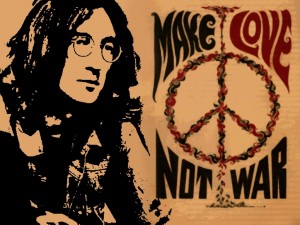
Though one Imagined, then was shot,
For singing of the working class,
While others in their prisons rot,
And our hopes? - They're just so much shattered glass.



 One Voyce of the World